
Cape Winelands International School
Welcome to the Robertson campus. We opened our school in Robertson in January 2023, on a charming, historic rented property. By November 2023, our growth had reached a point where we were able to register as an independent school. By the start of 2024, our student numbers had nearly tripled. We now offer mixed-age classes for students ranging from pre-school (5 years old) to high school (AS and A level).


Cape Winelands International School
Welcome to the Robertson campus. We opened our school in Robertson in January 2023, on a charming, historic rented property. By November 2023, our growth had reached a point where we were able to register as an independent school. By the start of 2024, our student numbers had nearly tripled. We now offer mixed-age classes for students ranging from pre-school (3 years old) to high school (AS and A level).
Learning Through Play and Exploration
Our small classes (maximum 18 students) are each led by an experienced teacher and supported by an teaching assistant. We foster cooperation, kindness, and tolerance across age groups through play, cultural, and sports activities. Our school aims to feel like a family, where reducing anxiety and creating a caring, homely environment helps students reach their full potential.
21st-century inquiry-based skills, in-depth learning, high-standard international curriculum.
Encouraging each child to strive for excellence, be self-driven, and reach their full potential.
Problem-solving by finding creative solutions to global challenges.
Instilling a lifelong love of learning and placing happiness at the heart of everything we do.
We recognise each child's potential through holistic and individualised learning.
Our school provides a kind, child-friendly, international-quality education that equips young people for happiness and success in a fast-paced, tech-driven world. Rooted in our ten core values, we take a holistic approach to education, shaping global citizens with the wisdom, skills, and knowledge to navigate and positively impact their world. This is our vision of twenty-first-century education.
“Creative learning for a bright new world.”
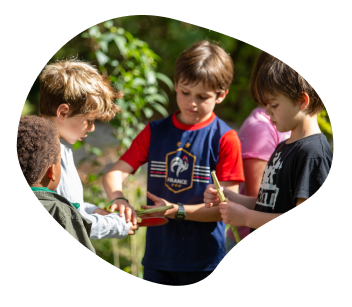
We want your child to belong
At Cape Winelands International School, every child is part of our family. There are no “in” or “out” groups here. Our teachers and students work together to create an inclusive, nurturing community where all kinds of minds and identities are celebrated.
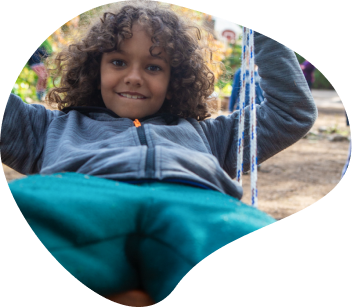
We’ll support your child
Our small classes and individualised tuition and pacing for each child ensure that no child gets left behind – all core learning skills are mastered before advancing to the next level. Your gifted child seldom gets bored, as we extend children as fast as their abilities and interests allow.
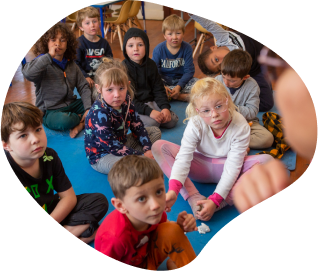
We understand your child
We wholeheartedly embrace diversity. We appreciate your child’s unique way of thinking, their curiosity, and their creativity. We understand the challenges that traditional schools might pose and are committed to providing a respectful and supportive environment for your child from day one.
We accept applications throughout the year. Acceptance is dependant on available spaces.
Kindly fill out our inquiry form, and we will schedule a meeting with you.
Step 1: Complete our online application form.
Step 2: We will contact you to arrange a meeting.
Step 3: If we offer your child a place at our school, we will start the registration process with you.
Step 4: Complete the registration contract and pay the registration fee and learning materials fee.
Frequently Asked Questions - Cape Winelands International School (Robertson)
We encourage active learning, critical thinking and self-discipline. Our classes are ‘noisy’ because students are always fully engaged in the learning task at hand, discussing ideas, exploring and sharing. Our inquiry-based approach starts out with an assessment of what students already know; helps students develop their own research questions to further extend that knowledge; guides them through the research process; and ends in a Learning Exhibition. Through our regular Learning Exhibitions students are given opportunity to articulate and present this inquiry journey to other class groups and parents.
We do not have school bells: we all learn to manage our time effectively.
Yes! We only employ qualified and SACE registered (or equivalent professional registration) lead teachers. We already have several wonderful, very experienced educators on board.
Click here to read more about Cambridge.
Yes! We use the globally respected and recognised Cambridge International Exams curriculum and examinations, through the final high school years, to give your child the qualification they need to access ANY university, within and beyond South Africa. For further information, visit the Cambridge website: https://www.cambridgeinternational.org/programmes-and-qualifications/recognition-and-acceptance/
For specific information on acceptance within South Africa, view the following: https://www.cambridgeinternational.org/programmes-and-qualifications/recognition-and-acceptance/country/southafrica/
Research and experience tells us that the South African national curriculum places undue demand on teachers and students to cover a wide range of unrelated content, in too short a period of time, with far too much emphasis on assessment. This means there is not enough time for in depth exploration, for developing critical thinking skills, or for consolidation of core knowledge and skills. There is also no time for students to express and explore their own passions and interests. Forced progression through set content per term, per year, is also very rigid and many students who are either skilled beyond or below the mainstream ‘norm’ struggle with this rigidity.
We believe that by using carefully chosen curriculum, and a flexible, child centred approach we are better able to prepare them for the contemporary world. Twenty first century children require twenty first century skills, which include high level literacy and articulation; the ability to access and use information intelligently; and high level problem solving and critical thinking skills. As a registered independent school, with permission to offer international curriculum, we thus intentionally break away from the restrictions of the national curriculum.
Yes. As a registered independent school, and because we employ SACE registered (i.e. professionally registered) teachers, all our assessments and reports are recognised as valid and translatable from one institution within South Africa to another. We provide extensive reports on each child’s progress and level of learning. These reports are meant for parents and other stakeholders and so are informative, rather than just a list of ‘marks’. If there is ever difficulty in ‘translating’ the grade or level of learning at our school to another school, we are always prepared to meet with the principal of the school your child will transfer to and provide clarity. Because we use the British, Irish and Cambridge Primary curriculums to track skills and knowledge through grade levels, we are able to accurately identify the grade level your child is working at.
We started out as a very small school and so we initially HAD to mix our class groups. But through this experience, and having done further research on this structure, we have discovered that there are numerous benefits to mixing ages within a class.
These benefits include:
– cooperation, and not competition, is fostered amongst children
– older students teach and model behaviour and learning for younger students
– younger students are inspired by their older classmates and advance faster
– older students assume leadership roles and develop kindness and greater awareness of others
– We are able to group students by skill level, rather than by age or grade
– Each child becomes aware of their individual skill levels and continuously works to build on this
– Motivation is built through personal development, rather than through competition
– Reducing competition also reduces anxiety and ‘learned helplessness’ in those students who struggle to keep up with a same-age peer group
– Because we are always introducing foundational concepts to the youngest in the group, older students benefit from repetition and consolidation of core knowledge and skills, before they are given extension work that builds on this foundation. Repetition results in mastery.
– Students view mistakes and the learning process as normal because they see others at different stages in the learning process at all times
– Students are able to be with one teacher for two to three years. This allows the teacher to track their development continuously and to develop a trusting relationship with each student.
It is for these reasons that at CWIS we will always endeavour to group students in mixed age classes.
In phases 1 and 2 optional additional costs could include school field trips, and your child’s participation in extra-murals, after care or private sports clubs.
In Phases 3 and 4, each student will need to have a laptop computer and may need to purchase additional textbooks. Cambridge (CAIE) IGCSE, AS and A level exams will also need to be paid for – this can be costly. Our goal in phase 4 is to work within the parents’ budget to provide tuition and exam preparation, and then to work out an exam timetable that helps you – the parent – to spread the cost over several years. Every decision in this phase will be made in consultation with parents / guardians.
You will need to purchase a school hat and a school jacket for when your child goes on school outings.
No. We encourage students to choose their own clothing, learn how to dress appropriately, and come to school ready to learn and to play. There are two items of clothing parents will need to purchase for when students go on outings: a school hat for summer months, and a school jacket for winter months.
Grade R & Phase 1: 8:10am to 1pm
Phase 2: 8:10am to 1:30pm
Phase 3 and 4: 8:10am to 2pm
Please view our Language and Admission policy here. In short, English will be the primary medium of instruction and we will support students coming from different language backgrounds to transition into an English learning environment.
Afrikaans will be taught as an additional language in phases 1, 2 and 3. Exposure to other languages will be arranged from time to time, as resources allow. In Phase 4, there is a wide selection of languages students could opt to learn (using online language tutors) and examine through Cambridge. Click here to scroll through the list of IGCSE subjects available through Cambridge to get some sense of how broad the options are.
We manage the phase 4 group (upper high school) more like a tutor centre, using a “flipped classroom”, blended learning approach. This means that all core subjects – English, Afrikaans, Mathematics and the Sciences – are taught by teachers employed at the school. Additional subjects are facilitated by our staff or by qualified online tutors who are subject specialists and who can offer your child individual support.
The school will work with you to decide the range of subjects and at which level your child will write exams (IGCSE; AS; or A level). Each child’s course of study and the range of subjects chosen is individualised to ensure that your child succeeds in accessing the further education and career opportunities they might want. We also consider the entrance requirements of different institutions in different countries. Cambridge offers us the flexibility to make these choices.
Click here to scroll through the list of IGCSE subjects available through Cambridge to get some sense of how broad the options are.


